Reference
Common AC Problems in Orlando Homes
Most cooling complaints fall into a manageable set of patterns. This reference groups them by what a homeowner actually notices, with the likely causes behind each and where to read more.
No Cooling at All
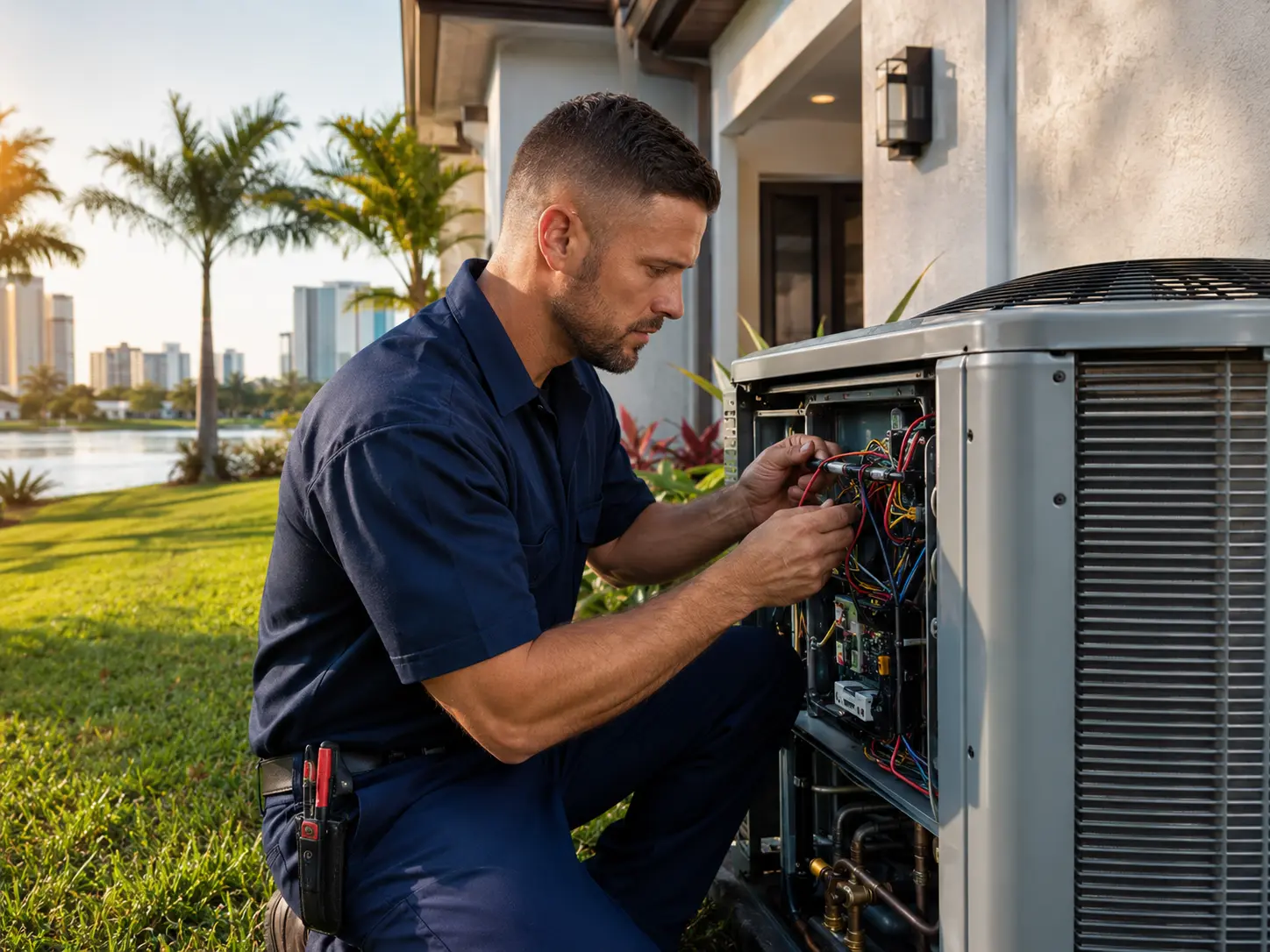
Either the system is not receiving a call for cooling, or it is receiving one and cannot act on it. Control power, breakers, float switches, capacitors, and contactors cover the majority of these.
The distinguishing observation is whether the indoor blower runs. Blower running with a silent outdoor unit is an outdoor-side problem; nothing running at all is a power or control problem.
Weak Cooling and Long Run Times
A system that runs and runs without satisfying is usually short on capacity for the conditions. Low charge, fouled coils, restricted airflow, and duct losses in a hot attic all produce this, and they frequently combine.
In Orlando the humidity load compounds it. A system spending most of its capacity on moisture removal has less left for temperature, which is why comfort complaints often appear before an outright failure.
Water Where It Should Not Be
Condensate handling problems are one of the highest-volume categories in Central Florida. Blocked drain lines, dirty pans, failed traps, and float switches are routine service items rather than unusual events.
Water can also come from a coil that froze and then thawed faster than the pan could drain, which links a drainage symptom back to an airflow or charge cause.
Noises and Odors
Sound is diagnostic. A hum without starting suggests a capacitor. Screeching suggests bearings. Rattling suggests loose panels or debris. Grinding from the outdoor unit is a reason to shut the system off.
Musty odors usually originate at a wet evaporator coil or drain pan and are common in humid climates. A burning or electrical smell is different: shut the system off and have it inspected before restarting.
- Humming with no start: capacitor or contactor
- Screeching or squealing: motor bearings or blower assembly
- Rattling: loose panel, debris in the cabinet, or fan imbalance
- Grinding: mechanical failure, shut down and call
- Musty smell: biological growth at the coil or pan
- Burning smell: electrical fault, treat as urgent
Short Cycling and High Bills
Short cycling means starting and stopping too frequently, which wears electrical components and leaves humidity in the home. Causes include oversized equipment, thermostat placement, restricted airflow, charge problems, and safety controls opening and resetting.
Rising bills without a comfort change usually trace to gradual efficiency loss: dirty coils, drifting charge, degrading airflow, or duct leakage that has worsened. Comparing bills against weather data helps separate equipment issues from a hotter-than-usual month.
Answers
Frequently Asked Questions
What is the most common AC problem in Florida?
Condensate drain blockages and airflow restriction lead the list, both driven by the long, humid cooling season.
Why does my house feel humid even when the AC runs?
Short cycles remove less moisture. Oversized equipment, high airflow across the coil, and thermostat placement are the usual contributors.
Are strange AC noises always serious?
No, but they are always informative. Rattles may be a loose panel; grinding from the outdoor unit indicates a mechanical problem worth shutting down for.
Why is my electric bill higher with the same settings?
Gradual efficiency loss from dirty coils, drifting charge, or worsening duct leakage is typical, though a hotter month can explain part of it.
Can most AC problems be prevented?
Many can. Filter management, drain service, coil cleaning, and electrical checks address the conditions behind the majority of preventable failures.
Related Pages
Discuss Your AC Problem
Describe what your system is doing and get repair information for your Orlando home.