Electrical
AC Electrical Repair
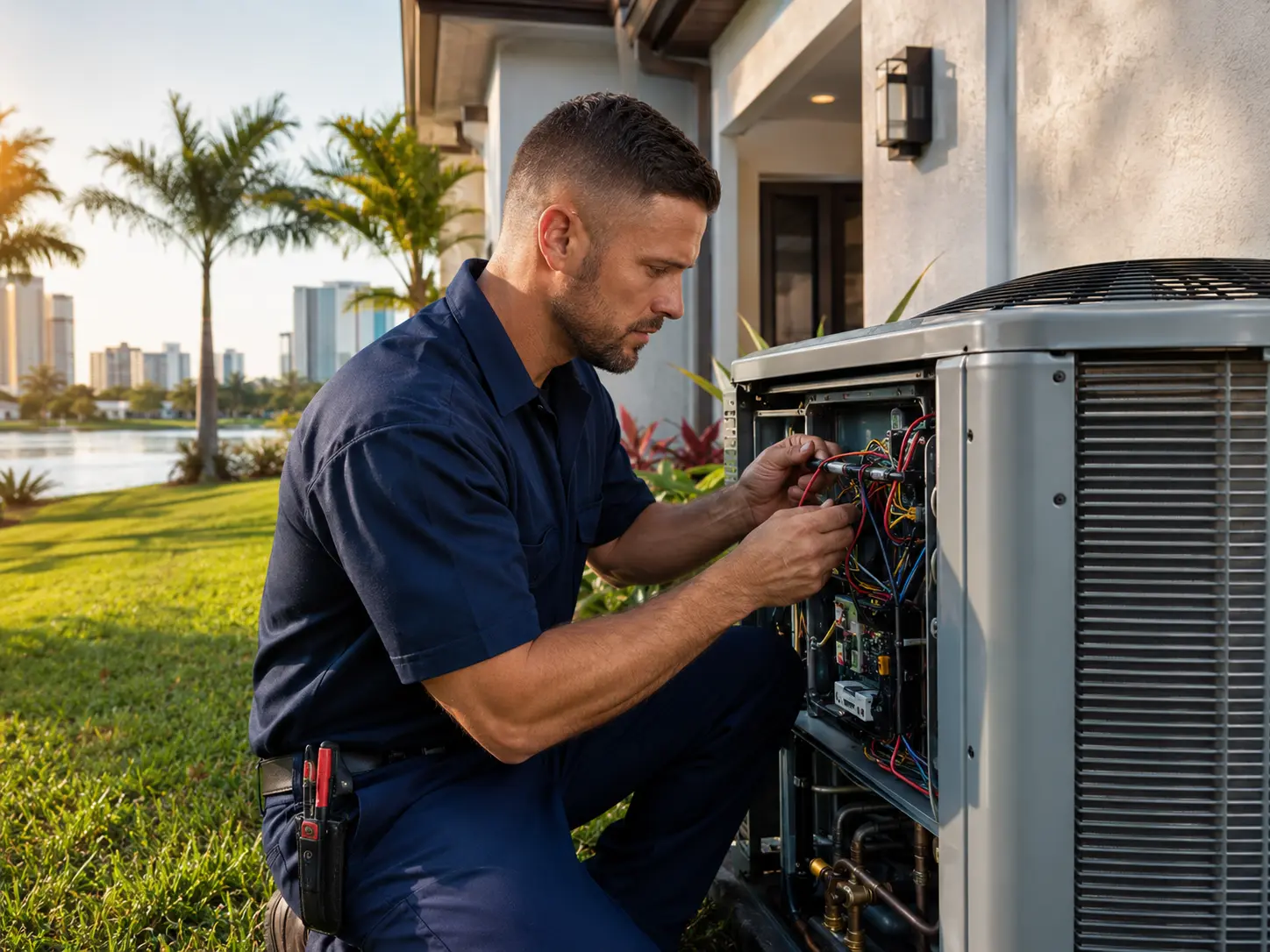
A large share of cooling failures are electrical rather than mechanical. Capacitors weaken, contactors burn, control fuses blow, and safety switches open. These parts are inexpensive relative to the rest of the system, which makes correct diagnosis valuable.
Capacitors and Contactors
The run capacitor provides the phase shift that motors need to start and run efficiently. As it ages, its capacitance drifts out of tolerance, motors draw more current, and starting becomes difficult. A humming outdoor unit that will not start is the classic presentation.
The contactor is the switch that energizes the outdoor unit. Its contacts pit and erode over thousands of cycles, and insects are notorious for lodging inside the housing. A contactor that welds closed keeps the compressor running continuously; one that fails open leaves the unit dead.
Control Voltage and Safeties
Low-voltage control power runs the thermostat and the safety circuit. A shorted thermostat wire, a failed transformer, or a blown control fuse takes the whole system offline in a way that can look like a major failure.
Safety devices are wired into that same circuit by design. High and low pressure switches and condensate float switches all interrupt cooling when conditions are out of range. When one opens, the correct response is finding out why, not bypassing it.
- Blown low-voltage fuse at the air handler control board
- Failed 24-volt transformer
- Tripped condensate float switch
- Open high or low pressure safety switch
- Damaged or shorted thermostat wiring
Breaker Trips and Supply Issues
A breaker that trips occasionally under extreme load and one that trips instantly on reset are different problems. The first suggests high amperage draw from a struggling motor or compressor. The second suggests a direct short, a grounded winding, or a failed breaker.
Repeated resets are not a diagnostic method. Each attempt puts current through a fault, and the risk is real. One reset is reasonable; after that, the circuit needs testing.
Storm Season Considerations
Central Florida's storm season brings surges, brownouts, and outages. Control boards and start components are the usual casualties. After an outage, a system that will not restart often has a blown fuse or a tripped safety rather than catastrophic damage.
Surge protection at the equipment is a modest cost relative to a control board or compressor, and it is worth discussing on systems with sensitive electronics such as variable-speed equipment.
Answers
Frequently Asked Questions
How do I know if my AC capacitor is bad?
Common signs include a humming outdoor unit that will not start, a fan that needs a push to begin turning, and intermittent starting. Confirmation requires measuring capacitance with the unit safely de-energized and the capacitor discharged.
Why does my AC breaker keep tripping?
Causes range from a shorted compressor winding or motor to a failing breaker or an overloaded circuit. Because the possibilities include real hazards, this should be tested rather than repeatedly reset.
Can lightning damage my AC?
Nearby strikes and grid surges can damage control boards, thermostats, and start components. Whole-home and equipment-level surge protection reduces that exposure.
Is a burning smell from my AC an emergency?
Treat it as one. Shut the system off at the thermostat and the breaker, and have it inspected before restarting.
How long do AC capacitors last?
Service life varies with heat exposure and run hours. In Central Florida's climate, they tend to reach end of life sooner than in cooler regions, and they often fail during the hottest weather.
Related Pages
Discuss Your AC Problem
Describe what your system is doing and get repair information for your Orlando home.