
Outcomes
What AC Repair Can Change
Repairs produce different kinds of improvement depending on what was wrong. This page describes realistic before-and-after outcomes by problem type, including the cases where a repair will not solve the complaint.
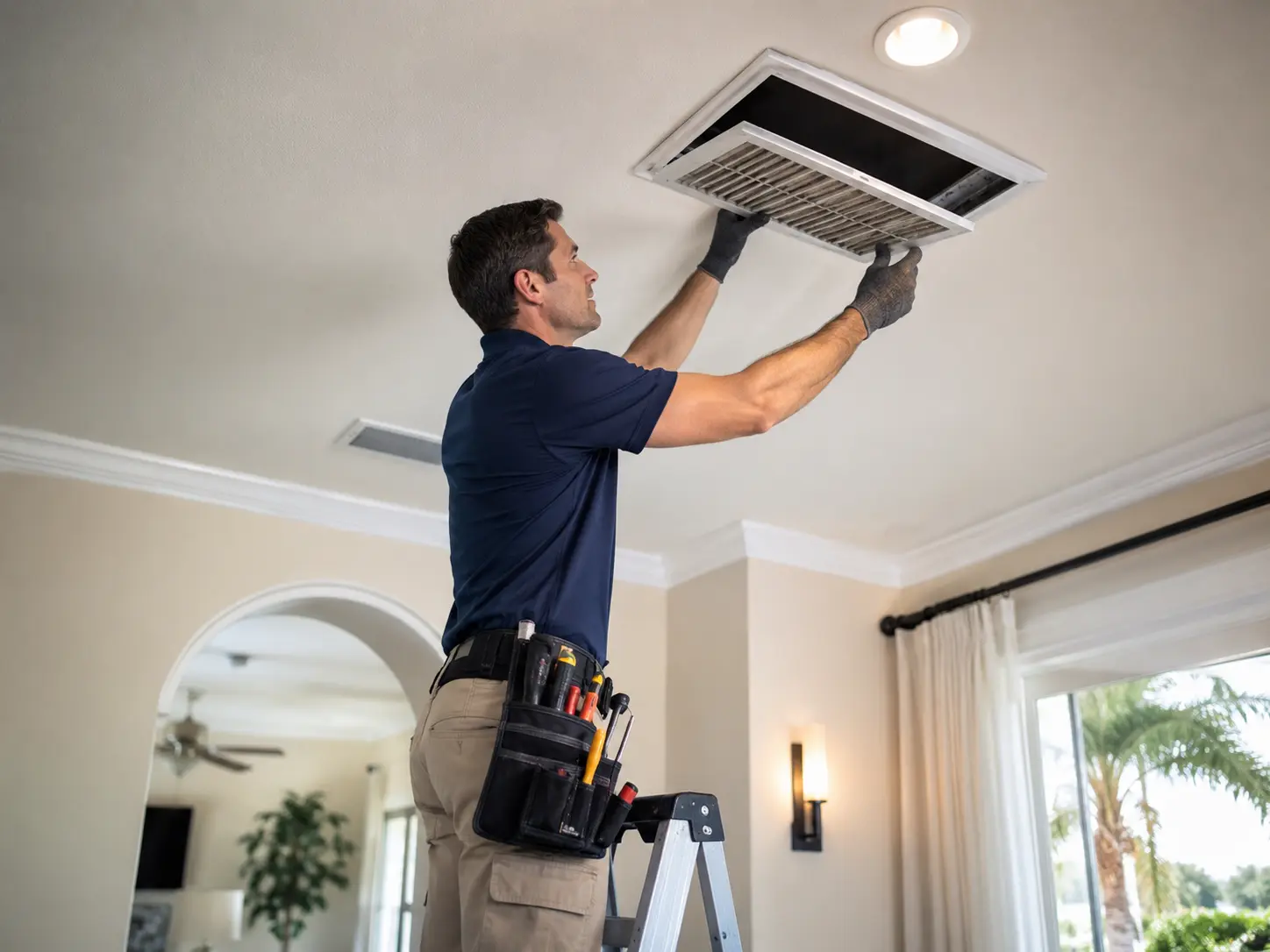
Airflow Correction
Before: weak air at the registers, rooms at the end of duct runs that never catch up, ice forming on the indoor coil, and a system running far longer than it should.
After: noticeably stronger delivery, more even room temperatures, and no recurring freeze cycles. Airflow correction is frequently the single most noticeable improvement a homeowner experiences, because it affects both comfort and reliability.
Refrigerant Leak Repair
Before: cooling that faded over weeks, poor performance on hot afternoons, ice on the suction line, and rising electricity use for worse comfort.
After: restored capacity and normal temperature split, with the leak repaired rather than the charge simply topped off. The distinction matters because recharging alone returns the same symptom the following season.
Electrical Component Replacement
Before: a humming outdoor unit that will not start, hard starting, intermittent operation, or breaker trips during peak load.
After: reliable starting and normal cycling. When the underlying cause was a motor drawing high amperage, addressing that too is what prevents the replacement part from failing again.
Drainage Repair
Before: unexplained shutdowns, water around the air handler, ceiling stains beneath attic equipment, or a musty smell near the return.
After: reliable condensate flow, a functioning float switch, and an end to the shutdown pattern. In Central Florida this is among the most common and most preventable service categories.
What Repair Will Not Fix
Repair restores a system to its own condition. It does not correct undersized ductwork, an oversized system that short cycles, insufficient return air, or an envelope with large uncontrolled heat gain.
If a home has always been humid, always had one hot room, or has never kept up in August, those are design and distribution issues. Recognizing that early prevents spending on repairs that were never going to address the complaint.
- Persistent humidity from oversized equipment or short cycling
- One room that has always run warm due to duct design
- Second-floor discomfort from insufficient upstairs return air
- Capacity shortfalls from additions never accounted for in sizing
- Duct leakage in hot attic space
Answers
Frequently Asked Questions
How soon should I notice a difference after a repair?
Most repairs produce an immediate change in operation. Humidity recovery takes longer, since the home's materials have absorbed moisture that must be removed over several cycles.
Will repair lower my electric bill?
Correcting restricted airflow, dirty coils, or improper charge often does. Replacing an electrical component on an otherwise healthy system usually has little effect on consumption.
My AC is repaired but the house still feels humid. Why?
Humidity control depends on run time and airflow across the coil. Short cycles, oversized equipment, or high blower speed can all leave moisture behind on an otherwise well-repaired system.
Can repair make an old system perform like new?
It can restore correct operation, but it does not reverse wear or change the equipment's design efficiency.
Related Pages
Discuss Your AC Problem
Describe what your system is doing and get repair information for your Orlando home.