
Refrigerant Circuit
AC Refrigerant Leak Repair
Refrigerant does not get consumed. A system low on charge has lost it somewhere, and finding that somewhere is the difference between a repair and an annual recharge habit. This page explains how leaks develop, how they are located, and what the repair decision involves.
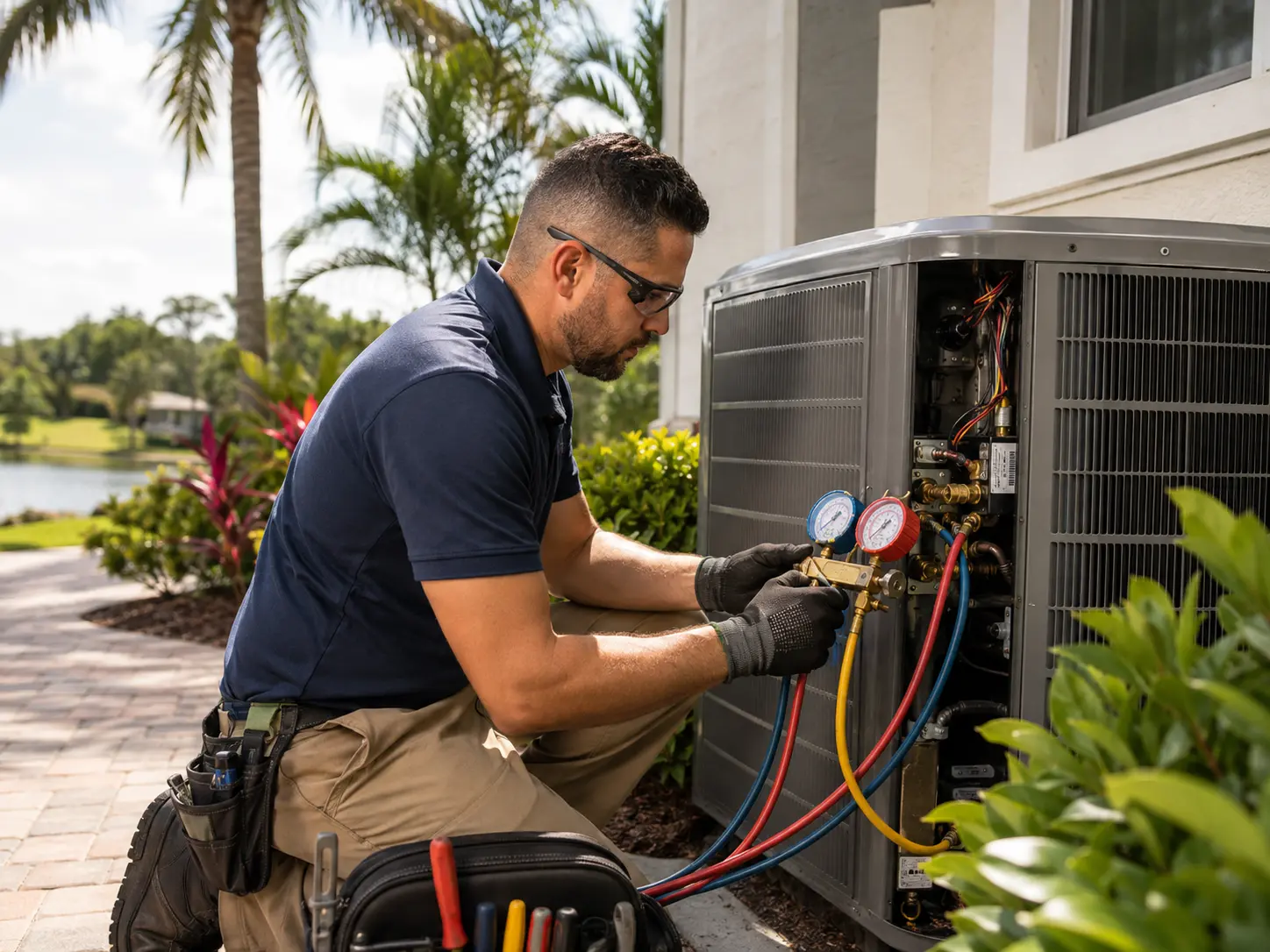
Signs of a Refrigerant Leak
Low charge changes how the system behaves before it stops it entirely. Cooling weakens gradually, run times stretch out, and the home has trouble keeping up during the hottest part of the day. Ice may form on the suction line or the indoor coil, and a hissing or bubbling sound is sometimes audible near the equipment.
A system that needed refrigerant last season and needs it again this season has a leak. That pattern is the clearest indicator there is, and it is worth acting on rather than repeating.
- Cooling that fades over weeks rather than failing suddenly
- Ice on the suction line, indoor coil, or at the service valves
- Longer run cycles with less temperature drop across the vents
- Higher electricity use for the same or worse comfort
- A repeat need for refrigerant across seasons
Where Leaks Develop
Leaks form where the circuit experiences stress: brazed joints, service valve cores, flare connections, coil tubing, and points where tubing contacts a cabinet or another line. Vibration and thermal cycling over years of Orlando run hours work on those points continuously.
Evaporator coils are a common source on older systems, particularly where formicary corrosion attacks thin copper tubing. Because that coil sits inside the air handler, the leak is often invisible until measurements point there.
How Leaks Are Located
Leak location combines methods. Electronic detectors sweep the circuit, ultraviolet dye traces slower leaks over time, bubble solution confirms suspected joints, and nitrogen pressure testing isolates sections when the leak is too small for a detector to catch reliably.
The process takes time, which is a real part of the cost. A leak large enough to empty a system in days is usually easy to find. A leak that costs a system its charge over a full season may need dye and a follow-up visit.
Repair Versus Recharge
Adding refrigerant without repairing the leak restores cooling temporarily and releases that refrigerant into the atmosphere again. It is also expensive to repeat, especially on systems using older refrigerants where per-pound costs are high.
Repair decisions depend on where the leak is. An accessible joint or a valve core is straightforward. A leaking evaporator coil means coil replacement, and on a system past fifteen years that cost often gets weighed against replacement instead.
Refrigerant handling is regulated. Technicians working with refrigerants must be certified under EPA Section 608 rules, and recovery requirements apply whenever a sealed system is opened.
Answers
Frequently Asked Questions
How often should an AC need refrigerant?
Never, under normal conditions. A properly sealed system holds its charge for its service life, so any need for refrigerant indicates a leak.
Is a refrigerant leak dangerous?
Common HVAC refrigerants are not acutely toxic in typical residential leak volumes, but they displace oxygen in confined spaces and should never be handled without training. The larger risk is compressor damage from running a system on low charge.
Why is refrigerant so expensive on older systems?
Older refrigerants such as R-22 have been phased out of production, so remaining supply is limited and priced accordingly. That cost often drives the repair-versus-replace conversation on aging equipment.
Can a leak be sealed with a chemical additive?
Sealant products exist, but many manufacturers and technicians avoid them because they can contaminate recovery equipment and complicate later repairs. Mechanical repair is the durable path.
How long does leak detection take?
A large, accessible leak may be found in under an hour. A slow leak can require dye injection and a return visit after the system has run for a period, which is why leak searches are quoted as diagnostic time.
Related Pages
Discuss Your AC Problem
Describe what your system is doing and get repair information for your Orlando home.